
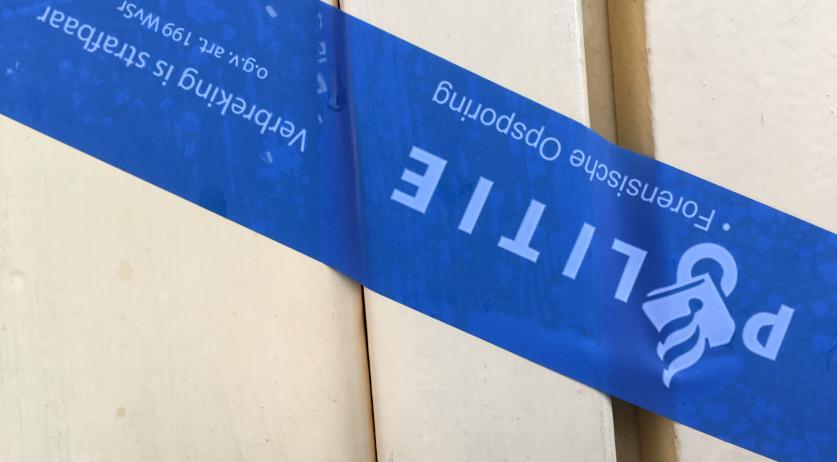
Squatters occupied a russian “house of spies ” in Amsterdam
Squatters occupied a building in the southern part of the capital of the Netherlands, which until recently housed the commercial office of the Russian Federation. And this is not just any building, because for years it was supposed to be a cover for Russian spies. “Inside the building, everything breathes espionage,” wrote the Algemeen Dagblad daily.
The building on Veluvelan Street has been owned by Russia since 1975, and the commercial office was officially located here. However, it was traditionally considered a place of espionage activities, so it was called “the den of spies”.
In February of this year, the Minister of Foreign Affairs of the Netherlands, Wopke Hoekstra, ordered to close the representative office. The head of the Ministry of Foreign Affairs of the Netherlands directly stated that Russia is trying to install secret agents in the Netherlands under cover.
Since then, the house has been empty, but on Saturday it was invaded by arbitrary persons. “This is the easiest building I’ve ever broken into,” one squatter told AD.
“It seems that the residents hastily left the building. In one room, there are still carts with laundry under a rope,” the correspondent reports. Piles of documents, gas masks and old sound recording equipment were found in the rooms. On one of them hangs a photo of Yuri Andropov, who briefly headed the Soviet Union in 1983.
The only door in the “spy house” that the squatters could not open is a huge safe. “The key broke in the lock, so we don’t know what’s behind the door,” says one of the squatters.
Last November, another group of squatters occupied a building in Amsterdam owned by Russian oligarch Arkady Volozhi, the founder of the search engine Yandex, the Russian equivalent of Google. In May of this year, the Amsterdam Court of Appeal rejected the request of the Volozh family, which demanded the return of the property, and decided that the squatters could stay there.
Squatters are individuals or groups of people who occupy vacant or abandoned properties without legal permission or the owner’s consent. Squatting is often seen as a form of direct action or civil disobedience, typically motivated by the need for housing or to challenge the concept of private property. Squatters may occupy residential, commercial, or industrial properties that are vacant or unused, often refurbishing and living in them.
The motivations behind squatting can vary. Some individuals may be facing homelessness or housing insecurity and see squatting as a means to secure shelter. Others may engage in squatting as a form of protest against high housing costs, property speculation, or social inequalities. Some squatters may also advocate for alternative models of housing and communal living.
It’s important to note that squatting is considered illegal in many jurisdictions, and property owners generally have the right to reclaim their properties through legal means. Laws surrounding squatting vary by country and even within different regions or states, and the legal status of squatters can differ significantly.
Writer Rovendo
Original content license agreement Creative Commons Attribution 4.0 license